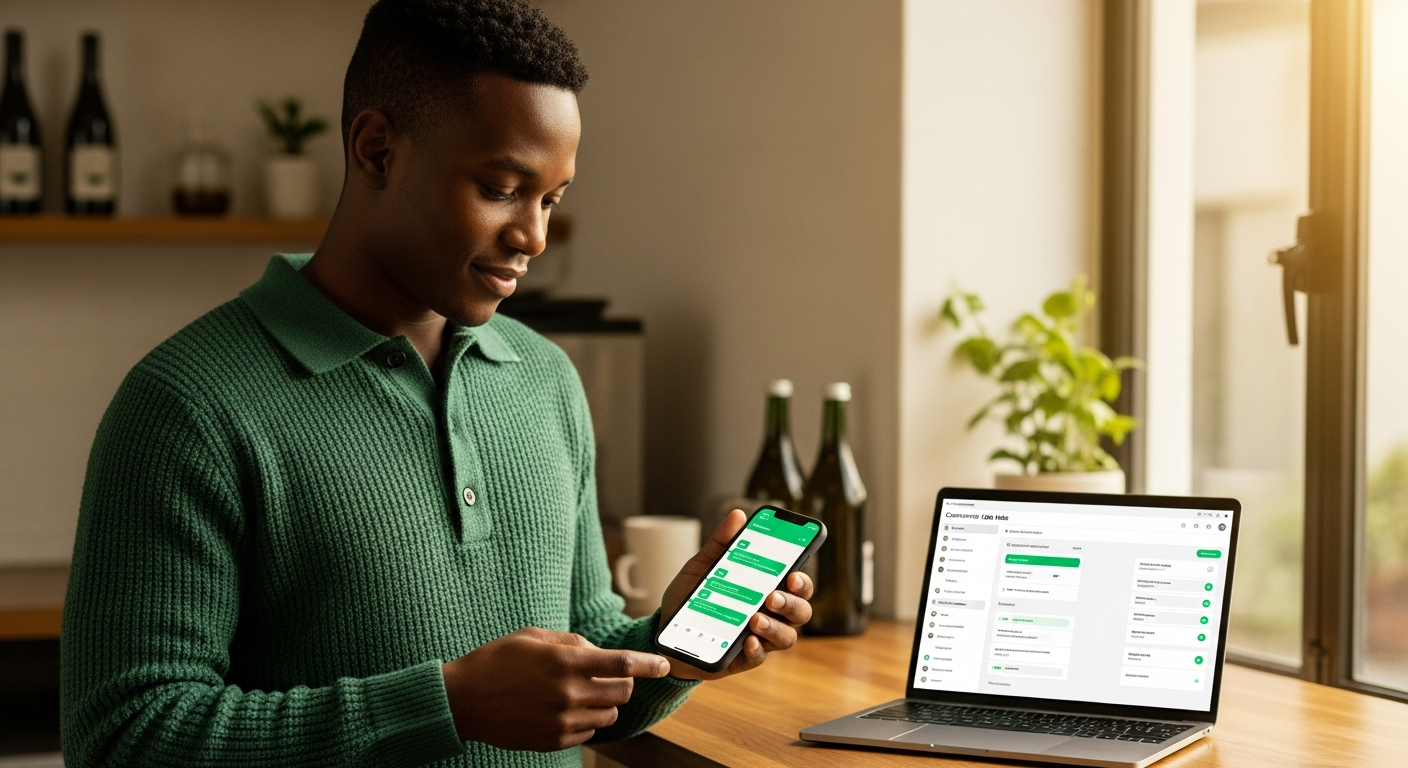
Send a South African customer an email and you're hoping it gets opened sometime this week. Send them a WhatsApp and it's read in minutes. That gap isn't a marketing statistic — it's how the country actually communicates. Ignoring it is leaving the most-read channel you have switched off.
But there's a right way and a wrong way to be on WhatsApp as a business. Get it wrong and you're a spammer who gets blocked. Get it right and it becomes the most reliable line you have to your customers.
Why WhatsApp, specifically here
South Africa runs on WhatsApp in a way that's hard to overstate. It crosses every demographic, works on modest data, and it's where people already are — no new app to download, no account to create. For most customers, a WhatsApp from a business they trust feels like a message, not an advert. That trust is the whole asset, and it's exactly what's easy to burn.
The channel that gets read in minutes is also the channel people guard most fiercely. Respect it or lose it.
The personal-number trap
Most businesses start by using a staff member's personal WhatsApp, or a single phone passed around the office. It works until it doesn't: there's no record of conversations, no way to share the load, the number leaves when the person does, and you're operating outside WhatsApp's business rules. One report from an annoyed recipient and you can lose the number entirely.
What "doing it properly" means
The official route is the WhatsApp Business Platform, run through a verified Business Solution Provider. AVAV is a verified BSP, which is what lets our clients operate on WhatsApp the right way. In practice, proper means:
- A verified business sender — your customers see your name, not a mystery number.
- Real opt-in — you message people who agreed to hear from you, which keeps you compliant and keeps you trusted.
- Approved message templates — notifications and updates that pass review, so they actually get delivered.
- A shared inbox with history — conversations belong to the business, not to one person's phone.
Opt-in is the whole game
WhatsApp protects its users hard. Message only people who asked to hear from you, give them an easy way out, and the channel stays open. Treat it like a cold-call list and it closes fast.
What it's actually good for
WhatsApp shines for the messages people genuinely want: appointment reminders, order and delivery updates, payment confirmations, support conversations, and quick back-and-forth that would die in an email thread. It's less a megaphone and more a service counter — and that's the mindset that makes it work.
Where it fits in your stack
The real win comes when WhatsApp isn't a separate silo but is wired into the systems you already run — so a delivery update fires automatically, or a support query lands next to the customer's record. That's why we built directly on the verified platform and designed it to connect to the rest of your operation, rather than being one more inbox someone has to remember to check.
The channel is already where your customers are. The only question is whether you show up there as a trusted business or as a number waiting to be blocked.